ANCESTRAL
HARMONY
Impulse responses, standing waves, and the acoustic behaviour of ceremonial space.
Multi-microphone field campaigns in the Maya lowlands of Guatemala and the Zona del Silencio, Mexico. The recordings become the material of the work: long-form compositions for listening rooms, live performance, and installation.
WORKS
Best on headphones, or in a quiet room, at moderate volume, and in full. These pieces are built on long duration and low frequencies. Short excerpts on laptop speakers won't carry them.
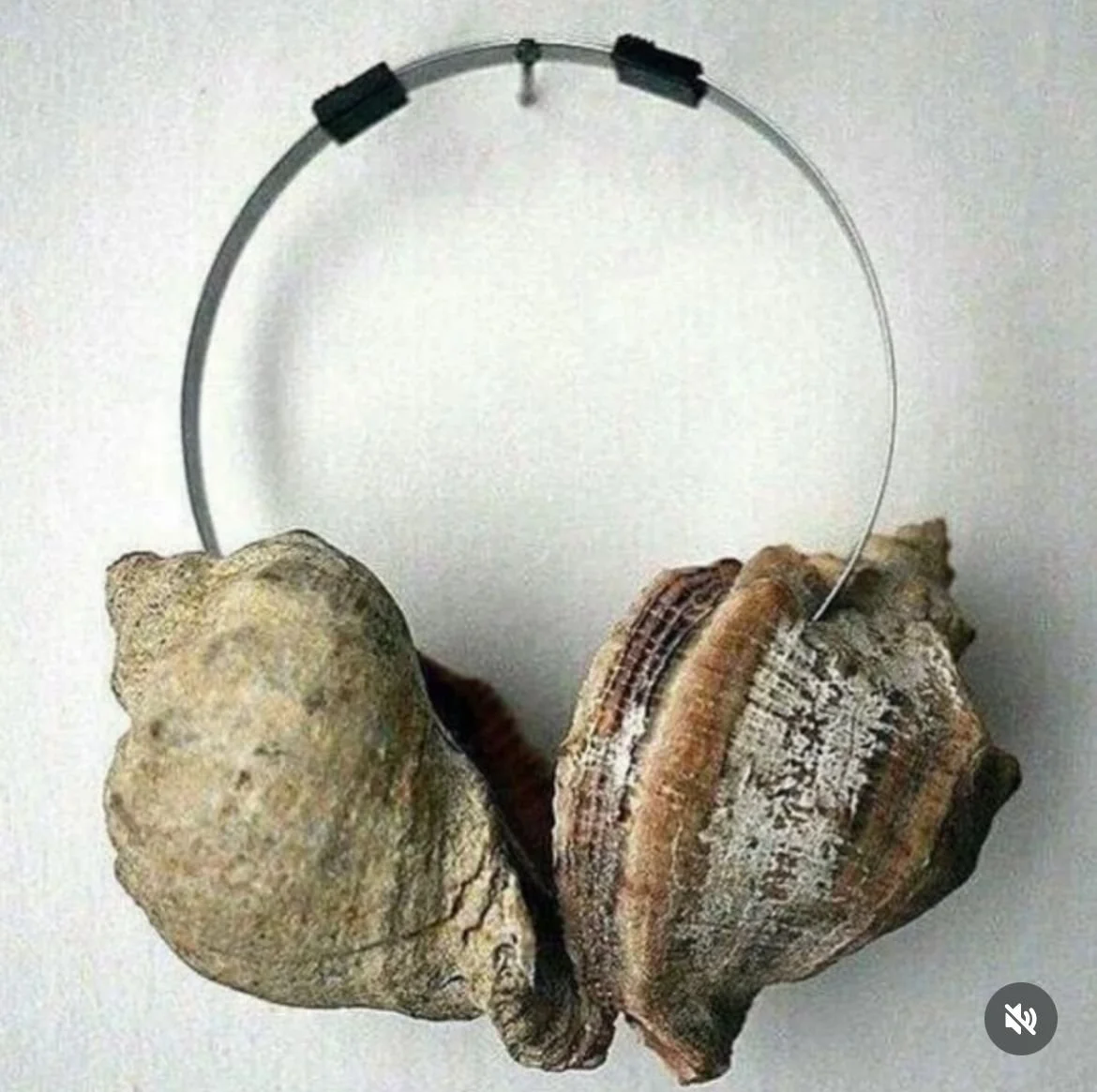

Composed from impulse responses and standing-wave recordings captured inside the chamber. Petén, Guatemala, February 2026.
METHOD
Ancient ceremonial chambers behave unusually. Their geometry favours particular frequencies, sustains certain tones far longer than others, and produces standing waves at fixed points in the room. These properties are measurable. Whether the builders intended them is an open question, and one this work contributes data to rather than answers.
01 — Measurement
A calibrated signal is played into the chamber through a loudspeaker, and the acoustic result is captured on a multi-microphone array. From this an impulse response is extracted: a complete description of how the space behaves acoustically, precise enough to reconstruct that behaviour anywhere.
02 — Composition
The recordings become the material of the work rather than an effect applied to it. Field captures, resonance chamber recordings and acoustic instruments — conch, ocarina, Native American flute, frame drum — are combined with granular processing and convolution.
ARCHEOLOGICAL SITES
Three field campaigns. Two ceremonial complexes in the Maya lowlands, and one open desert with no architecture at all.
Uaxactún — Petén, Guatemala
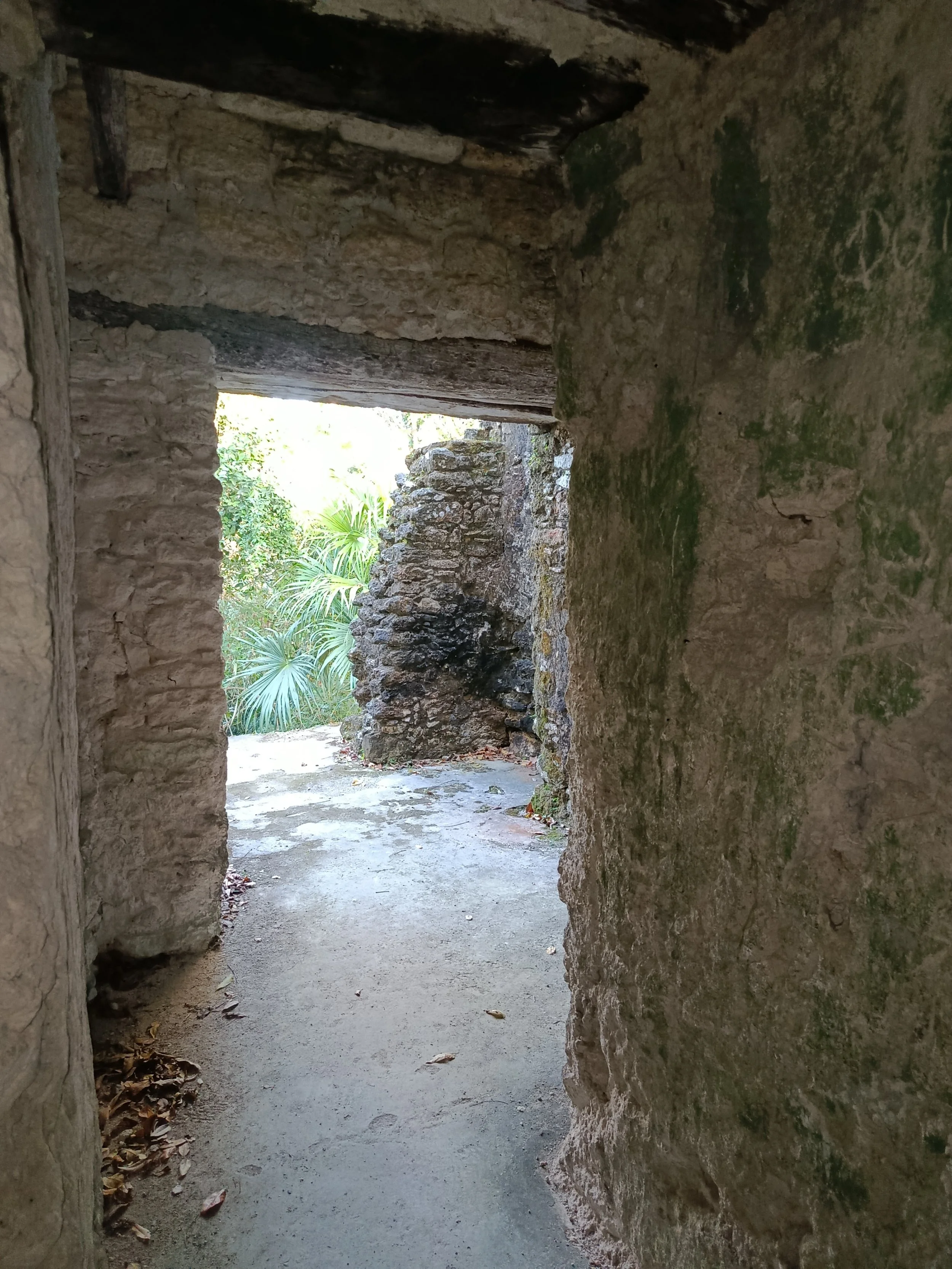
Structure A-XVIII, Grupo A, Uaxactún, Petén, Guatemala. Interior doorway of the range palace, wooden lintels in situ. Primary recording location for the Uaxactún impulse response and standing wave series. Photograph: Jean Mascret, 3 March 2026.
Impulse responses and standing-wave measurements in the range palace Structure A-XVIII, Grupo A. Corbel-vaulted chambers converge toward the capstone rather than closing with a flat ceiling, so their modal behaviour cannot be derived from plan dimensions — it has to be measured in place.
Capture at multiple points across the chamber maps where the standing waves reinforce and where they fall away, so the measurement describes a spatial field rather than a single listening position. The 34-minute Uaxactún piece in Works is composed from this material, the measured responses carried into the composition as convolution beds rather than replaced by synthetic reverb.
Tikal — Petén, Guatemala
Recorded at first light in a corbel-vaulted chamber approximately 1.5 m wide by 2.2 m long, with plain walls rising to 1.8 m and a stepped vault continuing a further 1.5 m above.
Analysis shows broad resonances centred near 457 Hz, 860–915 Hz, and above 1800 Hz — the 4th axial mode of the 1.5 m width and its first two octaves. The centres sit slightly above what the nominal width predicts, implying an effective width nearer 1.54 m, consistent with irregular masonry. Peaks are wide rather than sharp, consistent with a ceiling that has no fixed width above the springline. Response varied markedly with position, and decay times were long throughout.
Systematic per-position measurement is the object of the next campaign.
Zona del Silencio — Bolsón de Mapimí, Mexico
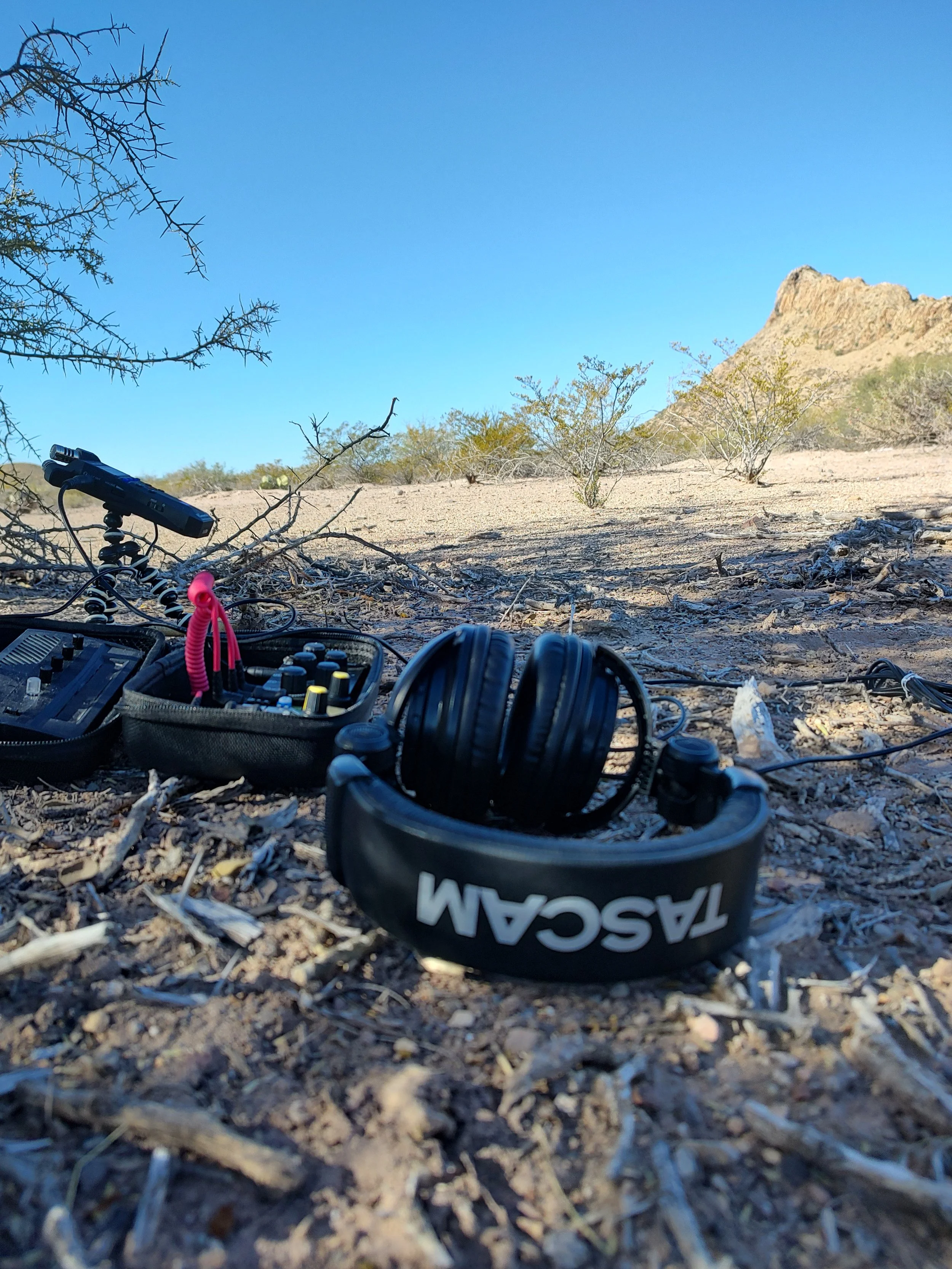
November 2025. Cementerio de las Reses, Zona del Silencio, Bolsón de Mapimí, Mexico.
Geophonic recordings: the acoustic behaviour of open desert, absent architecture. A reference condition against which the chambers are read.
Recorded in parallel, an electromagnetic capture taken from an HF receiver rather than a microphone. The material includes repeated frequency sweeps rising and falling across the band — the signature of ionospheric sounders and over-the-horizon radar, which probe propagation conditions continuously and are audible worldwide — and stepped multi-tone digital transmissions consistent with MFSK data modes. Both are ordinary HF traffic, documented here as part of the site's ambient signal environment rather than as anomaly. The Zona del Silencio's reputation for suppressed radio propagation is not supported by these recordings and is not claimed by them.
Recorded as heard, unprocessed, and archived alongside the acoustic material.
ABOUT
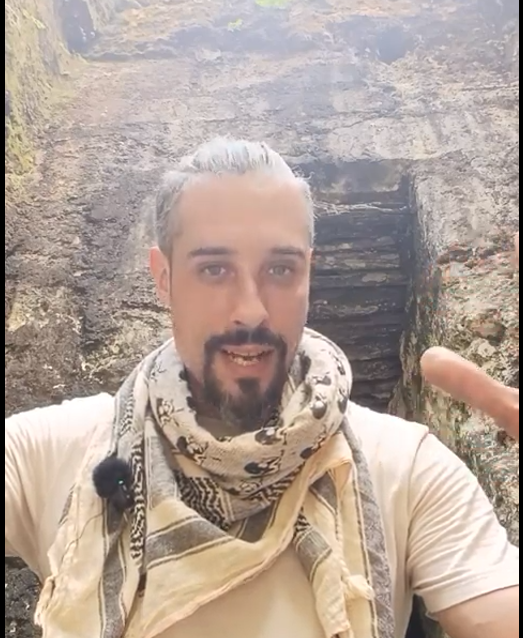
Ancestral Harmony is the project of SamVarta.
Trained in sound engineering in Brussels and holding a doctorate in pharmacology, he came to acoustics from the study of how physical agents act on the body. The work now centres on archaeoacoustics: documenting how ancient ceremonial architecture behaves acoustically, and composing from what those measurements contain.
He works between France, Mexico and Guatemala.
LIVE AND INSTALLATION
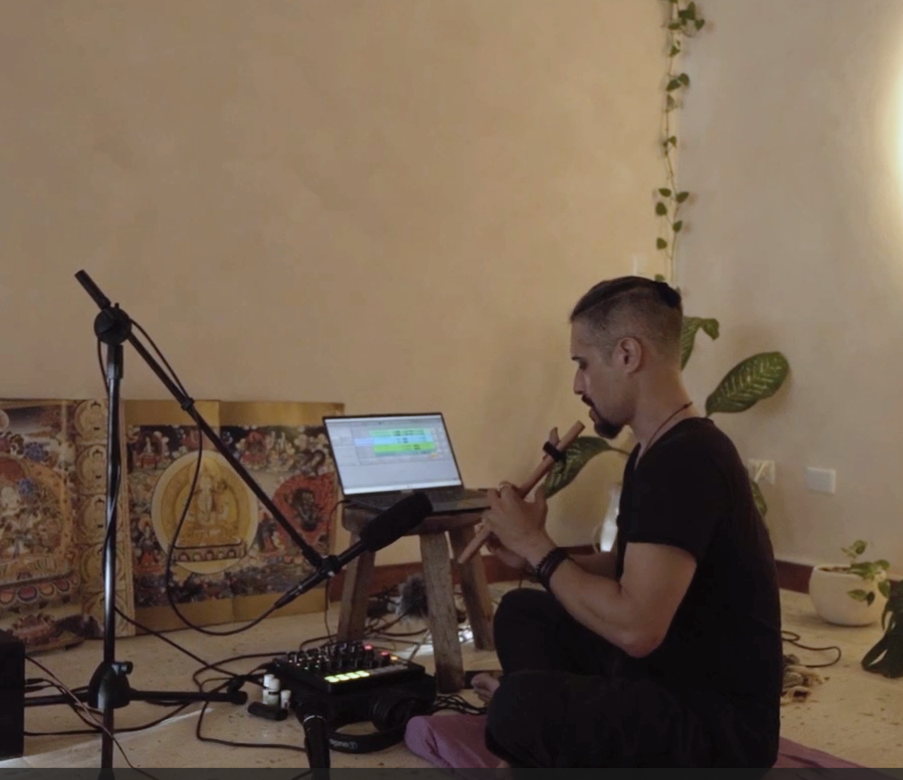
Ancestral Harmony exists as a live performance and as a spatial installation.
Performance
90 minutes. Acoustic instruments — conch, ocarina, Native American flute, frame drum — with electronic processing and a physical resonance chamber built for the stage. Designed for architectural spaces rather than conventional venues. Adapts to stereo, quadraphonic or multichannel diffusion.
Installation
Room-by-room spatial audio, built around a specific architecture. Video projection and photography integrated where the space calls for it.
Technical rider available on request.